









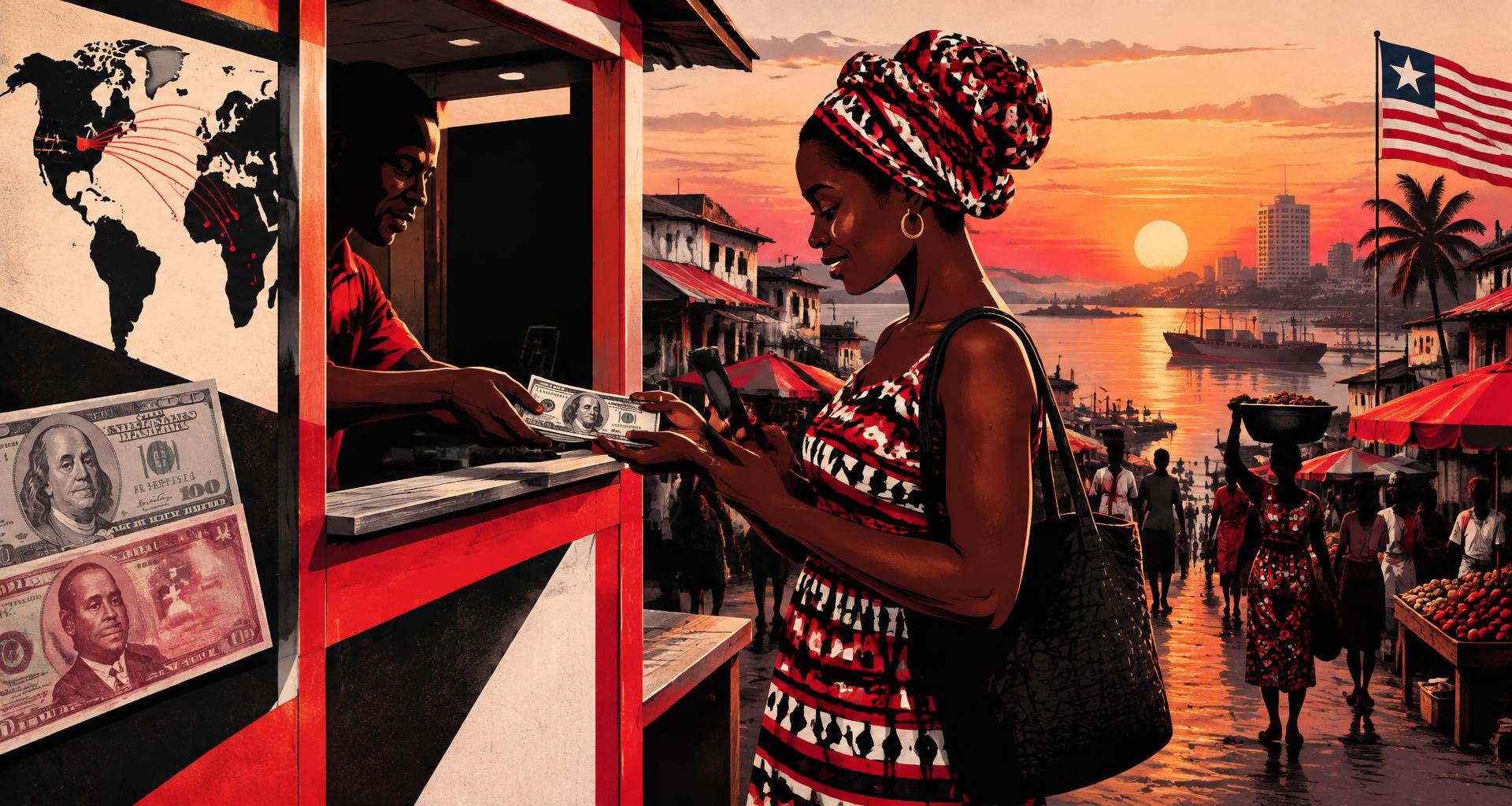
Money sent home by Liberians living abroad is one of the country’s largest sources of foreign income. According to the World Bank’s World Development Indicators, personal remittances received were equal to 21.3% of Liberia’s GDP in 2024 — a share that places Liberia among the most remittance-dependent economies in the world.
These flows matter at two levels. For households, transfers from family members in the United States and elsewhere pay for food, school fees, rent and medicine, cushioning families against inflation and a fragile job market. For the wider economy, remittances bring in US dollars that support the balance of payments and help stabilise the exchange rate — inflows the Central Bank of Liberia tracks in its annual and monthly economic reports.
The dependence cuts both ways. Because remittances follow conditions in host countries, a downturn or tighter immigration policy abroad can quickly reduce the money reaching Liberian households. Economists also note that most transfers are spent on consumption rather than investment, so they relieve poverty without, on their own, building the productive capacity Liberia needs.
The policy question is how to channel more of this diaspora money into businesses, housing and skills. Lower transfer fees, trustworthy digital payment channels and diaspora investment products are among the options discussed in World Bank and Central Bank of Liberia analysis.
This explainer draws on the World Bank’s data and the Central Bank of Liberia’s reporting, linked below; figures are as published by those institutions.
Original reporting
- World Bank — Liberia data (personal remittances, % of GDP)
- Central Bank of Liberia — Annual Report 2025
A publication with a point of view
Independent, curious and connected to the world. Read our editorial policy for how Today’s Liberia approaches accuracy, representation and transparency.